
HQ Supply-chain Carbon Analysis
| Group | Total (tCO₂e) | Wtd. EI (gCO₂e/tkm) | Count |
|---|---|---|---|
| Road | 12.34 | 68.5 | 128 |
| Sea | 45.67 | 9.2 | 34 |
| Rail | 3.21 | 24.1 | 12 |
| Air | 8.90 | 610.3 | 6 |
A preview reproducing the actual product screen’s structure and labels. All figures are illustrative.
Behind the totals, every single record.
Every transport record breaks down into WTT, TTW, and WTW, and once execution is sealed an evidence hash remains. Where a value is estimated, we show exactly which dimension was estimated — nothing hidden.
Emission records
Every figure shows its source
Sealed, AI-estimated, unresolved — across the dashboard, supply-chain disclosure and data quality, every number carries its provenance. Unresolved is shown honestly as absence of value, never as zero.
Carbon dashboard
fuelsim gap-fill (secondary) 3/9Supply-chain emissions disclosure
Data source composition
Unresolved ≠ 0 — a gap is absence of value (null + reason · REJECT), not zero emissions · Zero double counting
Emissions by transport mode
Color = mode · not the confidence axisOwn direct emissions (Scope 1) · monthly
★A separate ledger from supply-chain Scope 3The twin of carbon — safety on the same measurement.
Behavior-based indicators (BBI) derive from 1-Hz DTG measurement. Scores come from a deterministic formula sealed with score_hash, and no live scores are shown before the weight and consent gates pass — not even example scores.
Safety · AX
Behavior-based indicators (BBI) derived from 1-Hz DTG measurement turn transport safety into a verifiable coordinate system — the twin of carbon GX.
Rules make the number. AI never generates or alters scores — it only explains computed values by citation.
- 01Trip events cnt_* (harsh accel · braking · speeding · sharp turns)
- 02Normalized per 100 km
- 03Weighted penalty (versioned canonical weights)
- 04Score + score_hash seal
No data (DTG not connected) is NO_DATA, never a zero score — unresolved ≠ 0. Hazmat dispatch excludes unscored vehicles, fail-closed.
What is ready and what is waiting, shown as is. No live scores are exposed before the gates pass.
Awaiting connection — no live scores before the gates pass. Methodology and status only.
Source of truth = product Safety tab · this view is a mirror snapshot · LAS (AX products) in development
Collection to publication, one straight line.
Collect
Every transport record in one place. One-second data from the DTG flows in automatically.
Calculate
Deterministic calculation with the international standard and Korean emission factors. Same input → same result.
Manage
Track emissions at every level, with data quality grades visible right on screen.
Publish
Reports auto-published on the 1st of every month, in disclosure formats — ready to hand to auditors as-is.
The screens as they run today.
From road to ocean, on one screen.
From refrigerated trucks, yard tractors, and reach stackers to ocean container vessels — track emissions by vehicle and shipper in real time, all on the same screen.
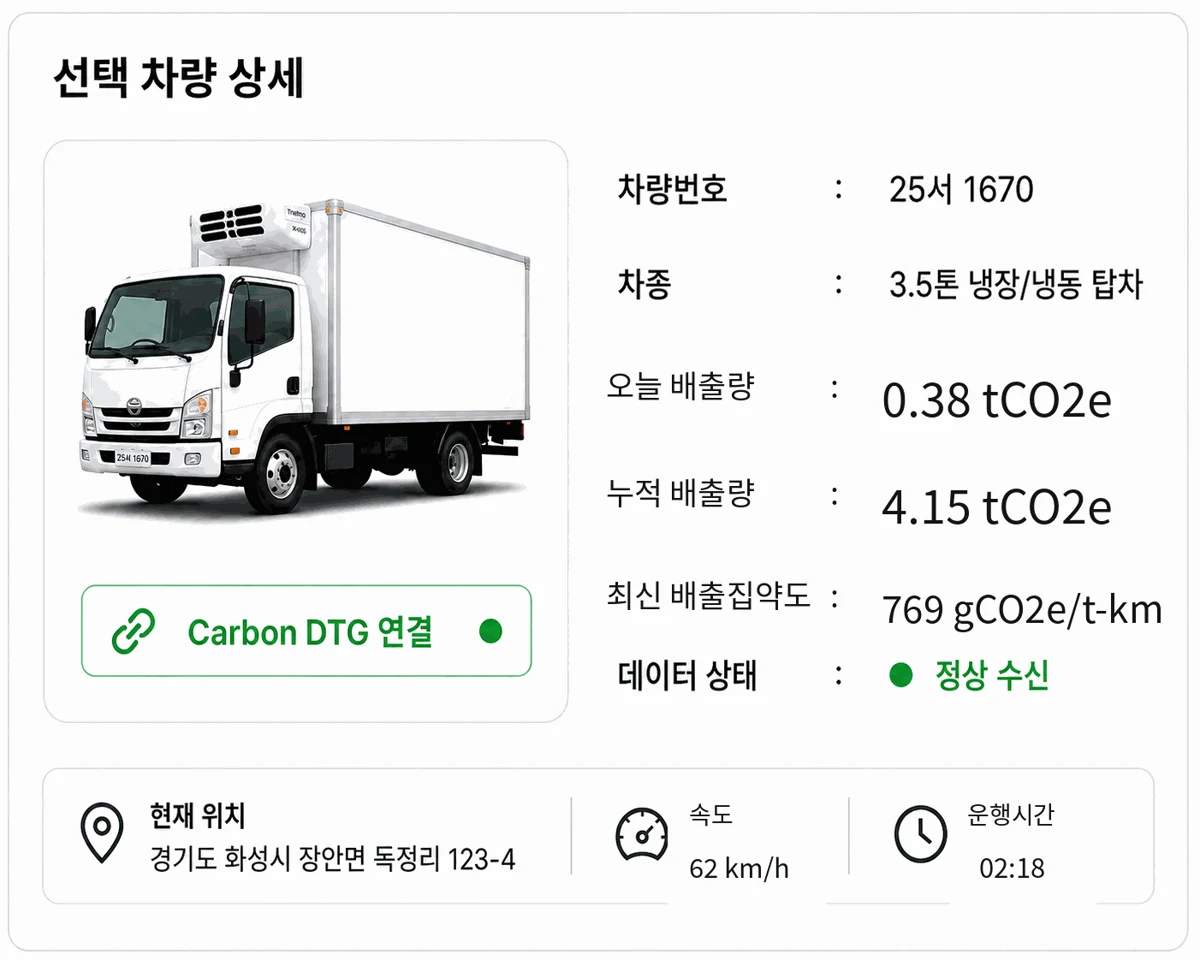
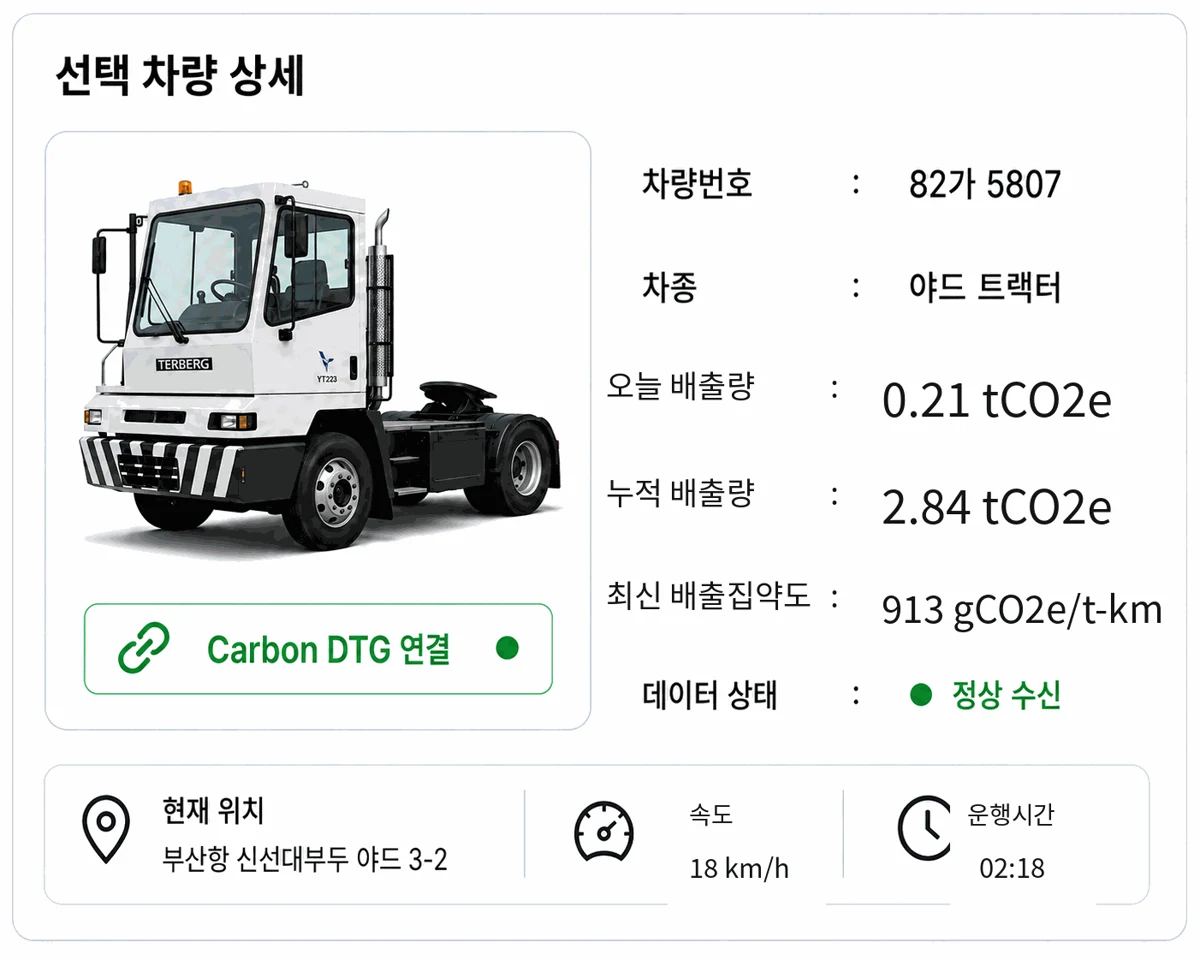


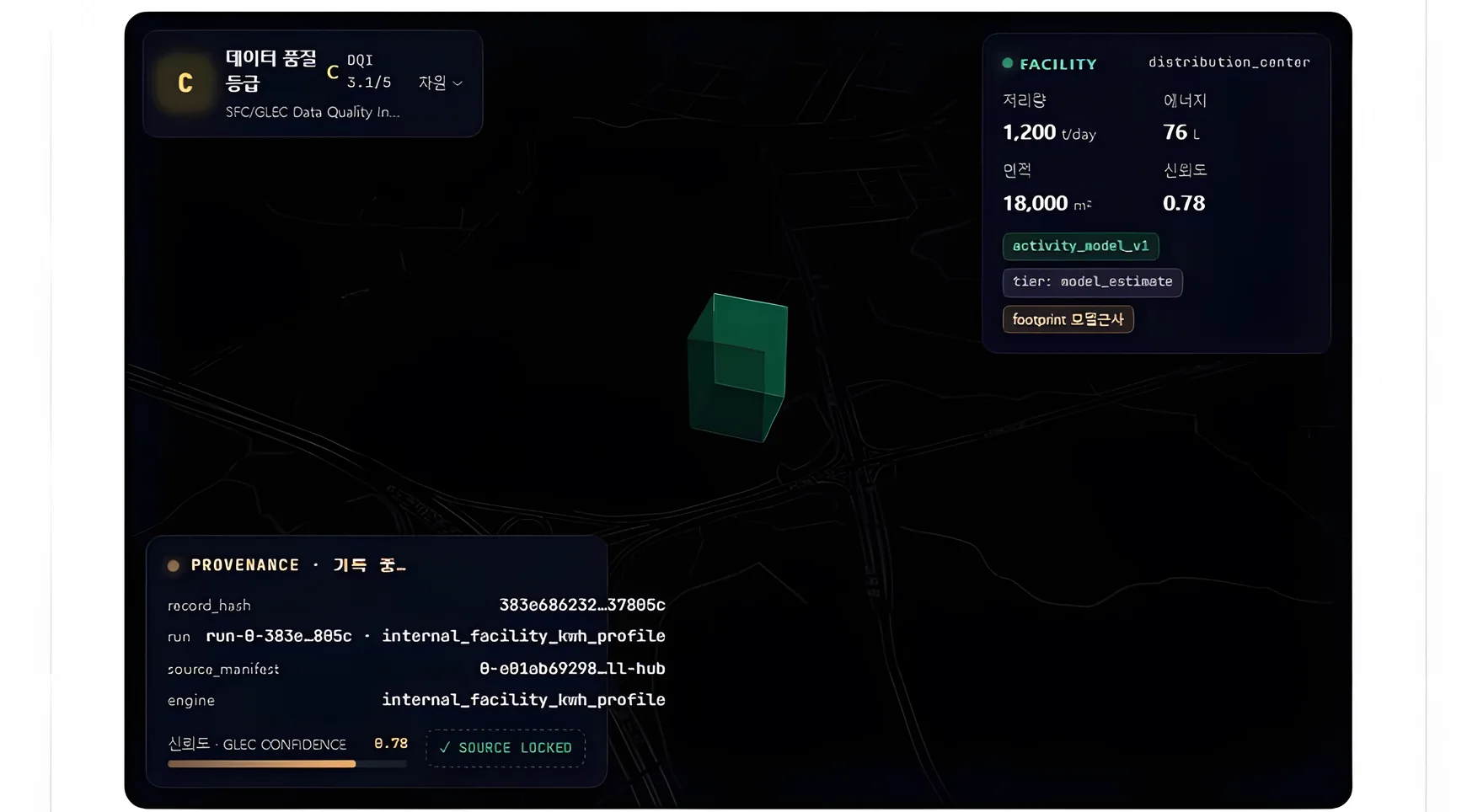
Where measurement can't reach, only clearly tagged estimates.
For legs beyond measured IoT coverage — international air, long-haul ocean — a harness-based AI simulator normalizes the missing data. Every derived value carries an explicit model_estimate tag, so it is never mixed with measured data.

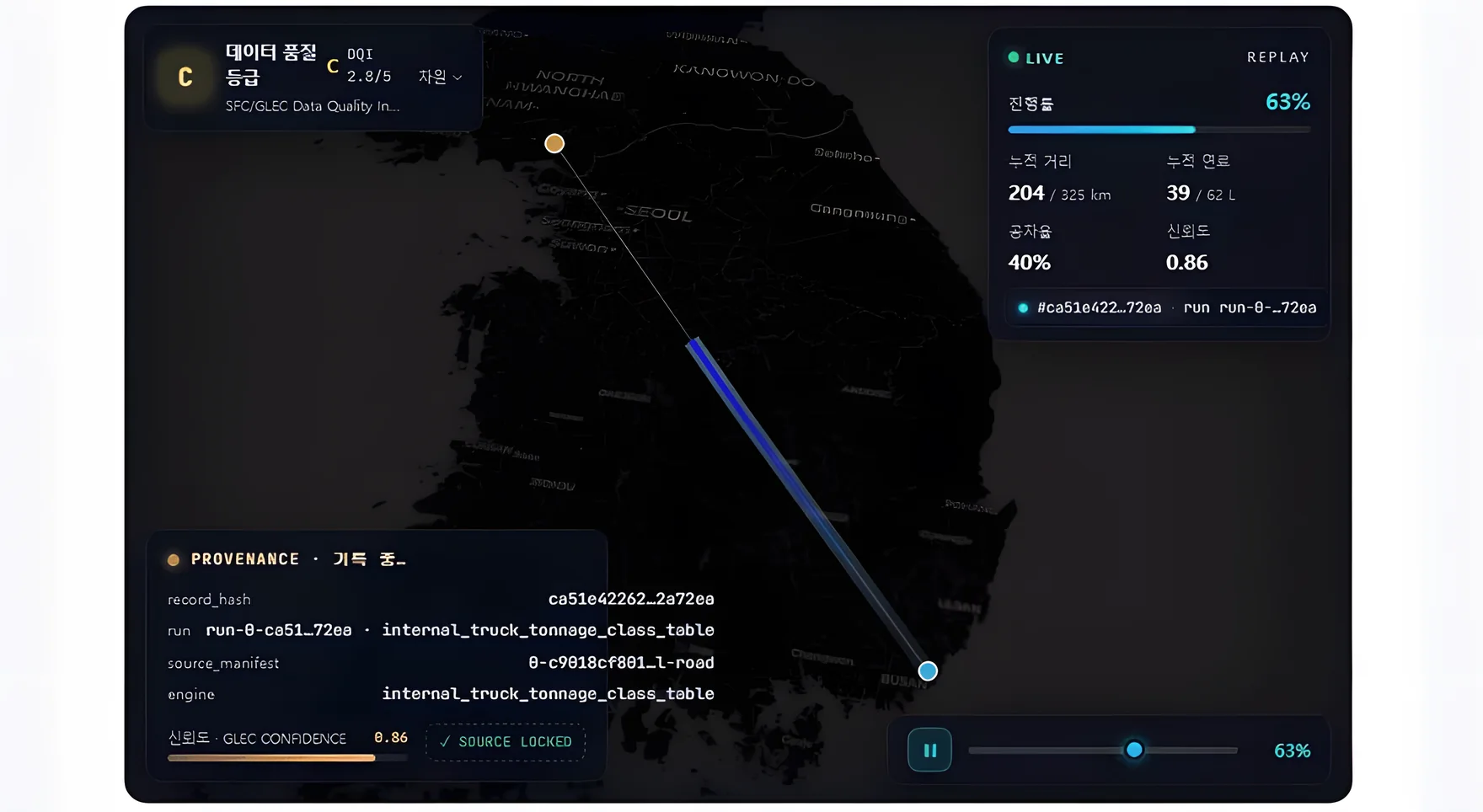
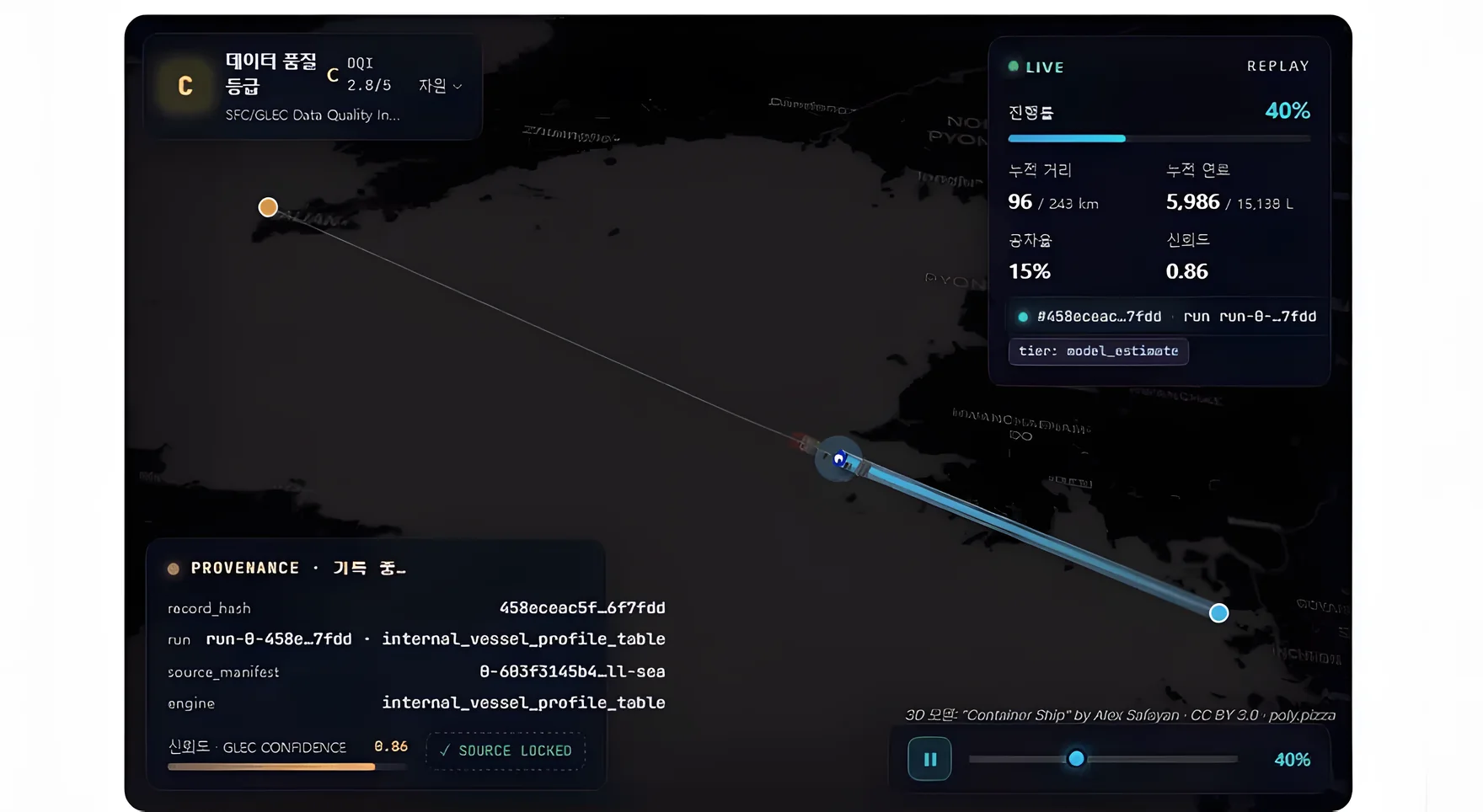

Data goes in. Emissions get calculated.
Given a vehicle ID, shipper, and transport distance, the system calculates WTT and TTW under ISO 14083 with country-specific emission factors. Same input, same result — every time, reproducible under audit.
Accurate reports cut your customers' Scope 3.
Estimated factors are padded to the safe side. When Cloud builds reports from measured values on paid transport legs, the overstatement disappears — and the emissions reported to your customers are corrected to actuals.
Emissions from purchased transport services are reported as measured — not estimated — so the shipper's Scope 3 is corrected to actual values.
Even when 90% of transport runs through agencies, subcontractors, and owner-operators, measuring and reporting the paid legs cuts the prime contractor's Scope 3.