
You switched to electric buses,and got no credits.
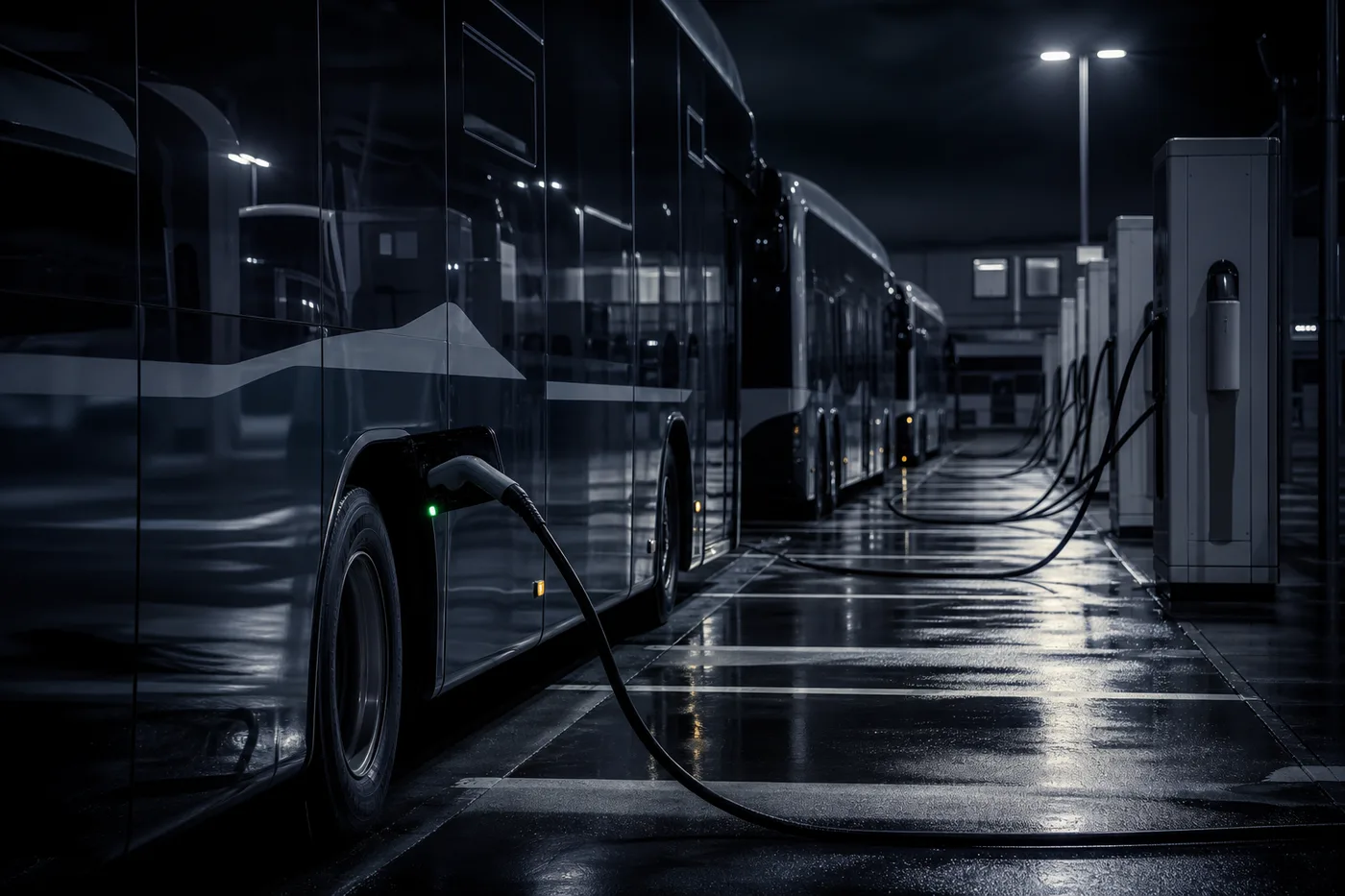
The electric-bus budget is secured — and then someone asks, «is there a path to recover this reduction as credits?»
- No measured diesel baseline before the switch
- Reduction cannot be proven under methodologies
- No path to global credit issuance
- KOC price and demand at roughly 1/10 of global
- Baseline measured by DTG before and after the switch
- Verifiable reduction under ISO 14083
- Meets global credit methodology requirements
- Issuance and management path via the EACs workbench
Here's how it fits your industry.
A transition that ended at the subsidy becomes a transition recovered as credits.
The supply chain changes when shippers demand the carbon data.
Most transport emissions come from vehicles the shipper never drives. That data only turns from estimate to measurement when the shipper asks for it as a term of business.
Draw the boundary at paid freight
Only transport you paid a freight charge for is the correct boundary for a shipper's Scope 3 report. LCS draws that boundary cleanly — no gaps, no double counting.
Classify by measurement, not estimation
Instead of average factors, we use data measured directly at the vehicle, classified precisely by transport mode and leg. A single ISO 14083 method that passes verification.
Require it of subcontractors
When a shipper requires measured data as a term of contract, the whole supply chain shifts from estimate to measurement. The request is where change begins.
Don't make the ask alone.
As your partner, LCS gives you the grounds to require data from subcontractors — and gives them the tools to respond. We build the bridge to measurement between the shipper who asks and the carrier who answers.
The questions this industry asks most.
We switched to electric buses — why no global credits?
Credit methodologies require proof of the baseline: what would have been emitted without the switch. Without measured data from the diesel operation before the transition, the reduction cannot be proven under the methodology — even if it really happened.
Are domestic KOC credits not enough?
KOC credits are tied to domestic market demand, trading at roughly one-tenth of global credit price and demand. The same reduction returns a very different amount depending on which market it becomes a credit in.
The transition has already started — can we still build a baseline?
Measuring the remaining diesel vehicles alongside the converted electric buses builds a before-and-after basis. The earlier you start before full conversion, the stronger the baseline evidence.
What does the LCS infrastructure cover in a bus transition?
The DTG measures pre- and post-switch operation at 1-second resolution to build the baseline, Cloud calculates and reports the reduction under ISO 14083, and the EACs workbench provides the issuance and management path for verified reductions.
Before you switch, measure the baseline.
We assess your industry's transport carbon regulations and your path to measurement, together.