
The fastest freightleaves the heaviest carbon.
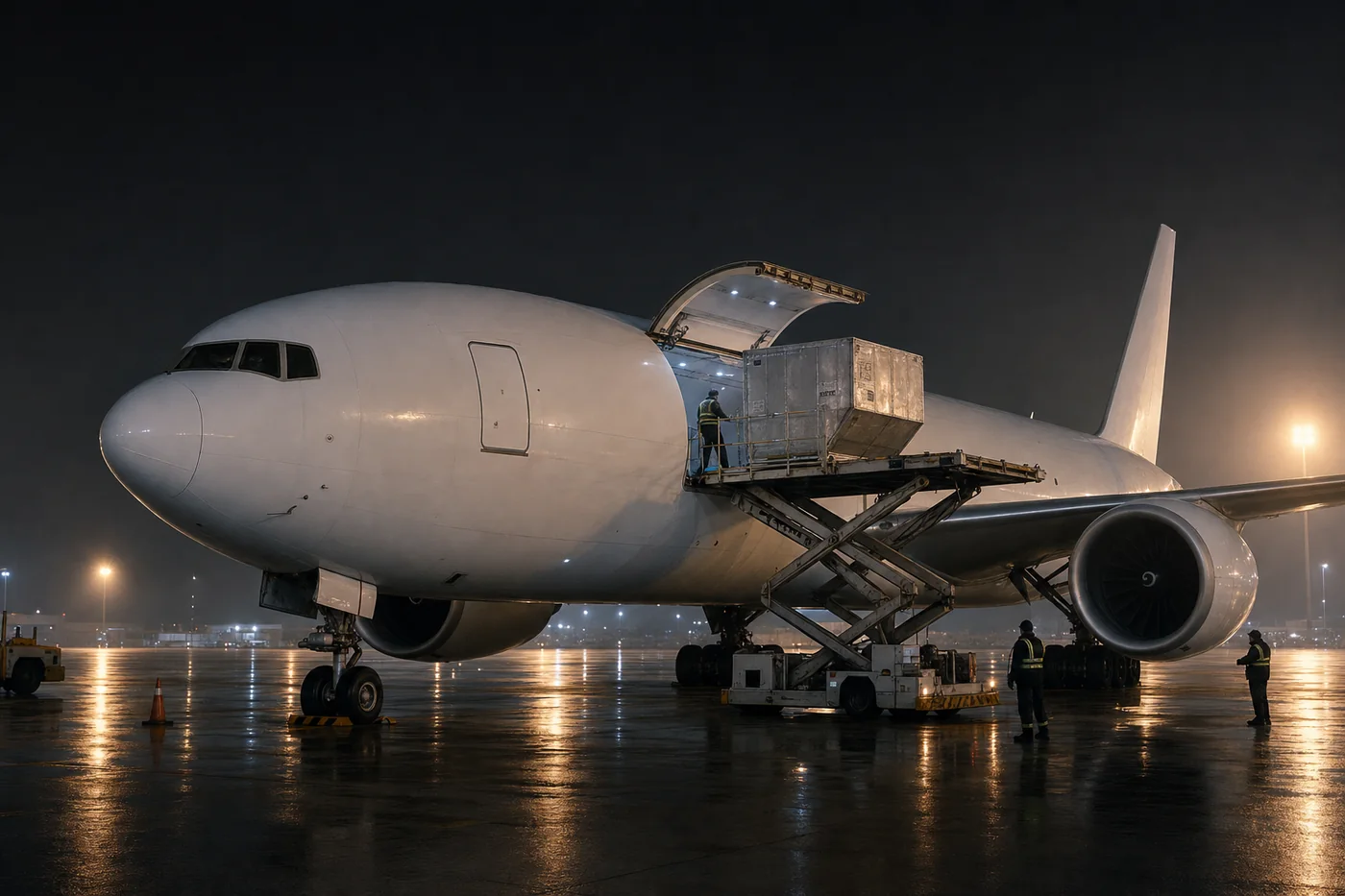
An overseas customer has asked for air express carbon that includes the ground legs.
- Air emission intensity under-reflected
- Ground trucking legs left out
- Unclear air-versus-road boundary
- No basis for the RTK calculation
- Air leg calculated on ISO 14083 RTK
- Ground trucking measured by DTG
- Consolidated door-to-door in a single method
- Clean per-mode boundary allocation
Here's how it fits your industry.
Sky and ground joined — filling the door-to-door footprint of air express.
The supply chain changes when shippers demand the carbon data.
Most transport emissions come from vehicles the shipper never drives. That data only turns from estimate to measurement when the shipper asks for it as a term of business.
Draw the boundary at paid freight
Only transport you paid a freight charge for is the correct boundary for a shipper's Scope 3 report. LCS draws that boundary cleanly — no gaps, no double counting.
Classify by measurement, not estimation
Instead of average factors, we use data measured directly at the vehicle, classified precisely by transport mode and leg. A single ISO 14083 method that passes verification.
Require it of subcontractors
When a shipper requires measured data as a term of contract, the whole supply chain shifts from estimate to measurement. The request is where change begins.
Don't make the ask alone.
As your partner, LCS gives you the grounds to require data from subcontractors — and gives them the tools to respond. We build the bridge to measurement between the shipper who asks and the carrier who answers.
The questions this industry asks most.
How is air freight carbon calculated under ISO 14083?
ISO 14083 calculates air freight on an RTK (revenue tonne-kilometre) basis, and air has the highest emission intensity of any mode. LCS calculates the air leg on RTK and measures the ground trucking before and after the airport with DTG, completing the door-to-door footprint.
Why are average factors alone not enough for air freight?
Air has such high emission intensity that even small estimation errors get amplified, and the ground trucking before and after the airport is often left out. On a door-to-door basis, both gaps show. RTK calculation and ground measurement together are what keep it accurate.
What does LCS measure versus standard-calculate for air freight?
The air leg itself is hard to measure, so it is calculated with the ISO 14083 RTK method and airline data. The ground trucking road legs before and after the airport are measured at the vehicle by DTG, consolidating sky and ground into one.
How do we get air and ground transport data?
Air legs are consolidated from airline and forwarder data via LCS API, while ground trucking vehicles connect DTG to OBD-II for measurement. Every leg is filled when a shipper requires air express on a door-to-door basis.
Down to the truck at the airport — by measurement.
We assess your industry's transport carbon regulations and your path to measurement, together.