
A truck running its refrigeration unit,calculated like an ordinary truck.
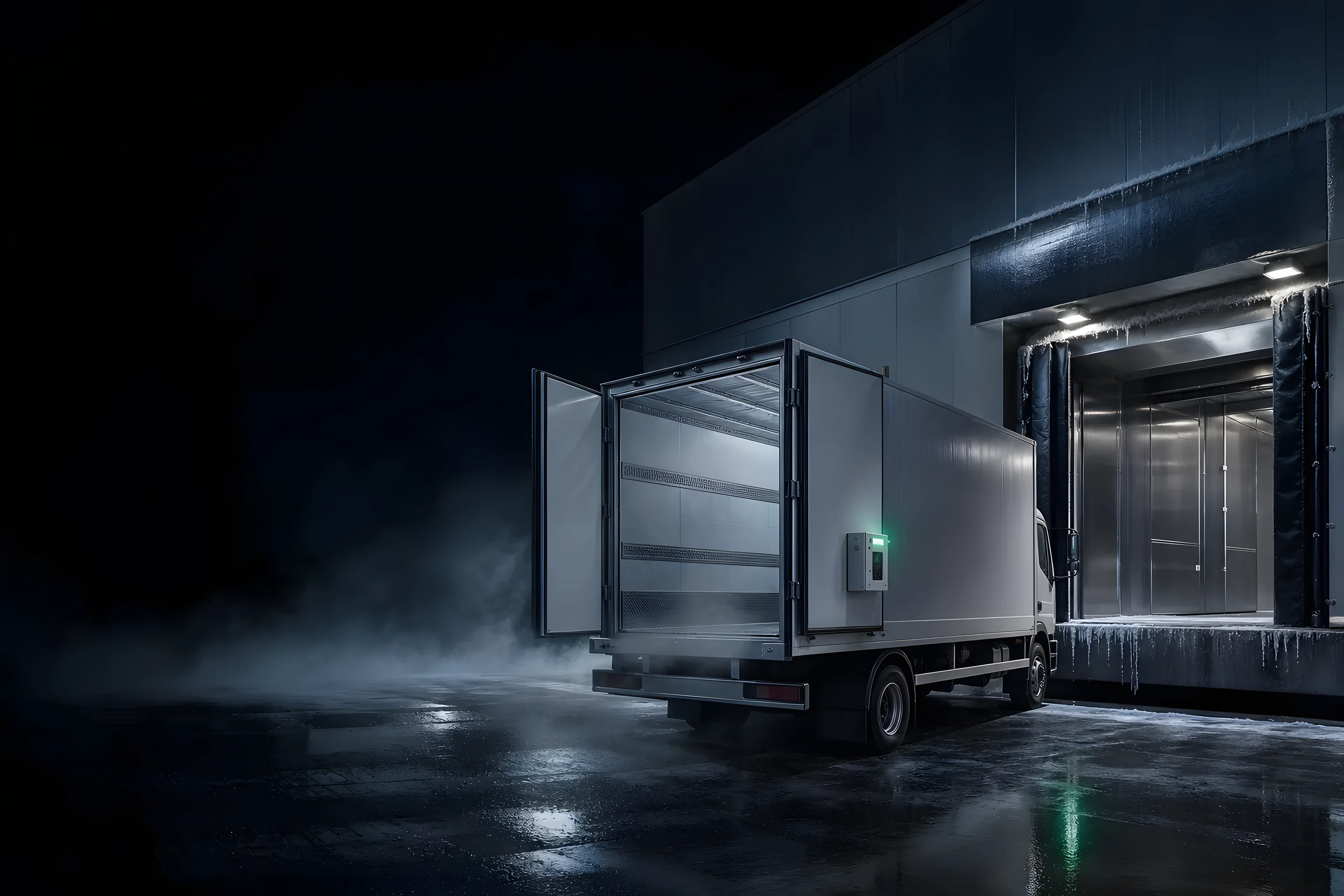
A retailer has made "accurate carbon figures for the cold chain leg" a condition of supply.
- Cooling load estimated with ordinary transport factors
- Distance-based estimates drift from reality
- No way to separate frozen from refrigerated legs
- No data to show when asked for the basis
- Actual fuel, cooling included, measured at 1-second resolution
- Refrigerated and frozen legs separated by measurement
- Calculated precisely under ISO 14083
- Trip records serve directly as evidence
Here's how it fits your industry.
Cooling load measured too — reporting the cold chain's true emissions.
The supply chain changes when shippers demand the carbon data.
Most transport emissions come from vehicles the shipper never drives. That data only turns from estimate to measurement when the shipper asks for it as a term of business.
Draw the boundary at paid freight
Only transport you paid a freight charge for is the correct boundary for a shipper's Scope 3 report. LCS draws that boundary cleanly — no gaps, no double counting.
Classify by measurement, not estimation
Instead of average factors, we use data measured directly at the vehicle, classified precisely by transport mode and leg. A single ISO 14083 method that passes verification.
Require it of subcontractors
When a shipper requires measured data as a term of contract, the whole supply chain shifts from estimate to measurement. The request is where change begins.
Don't make the ask alone.
As your partner, LCS gives you the grounds to require data from subcontractors — and gives them the tools to respond. We build the bridge to measurement between the shipper who asks and the carrier who answers.
The questions this industry asks most.
How is transport carbon measured for the cold chain?
Refrigerated and frozen transport burns fuel and power for the cooling unit on top of driving fuel. LCS measures that fuel, cooling load included, at the vehicle with DTG at 1-second (1-Hz) resolution and calculates under ISO 14083 to report the true per-leg emissions.
Why do estimation factors drift for refrigerated transport?
Estimation factors are based on ordinary transport, so they don't reflect the extra fuel the cooling unit burns. Over the same distance, actual emissions vary widely depending on whether the load is refrigerated or frozen. Only measurement captures that difference precisely.
How does the paid-freight boundary apply to refrigerated transport?
Only refrigerated transport you paid a freight charge for is the correct boundary for a shipper's Scope 3 reporting. LCS separates paid cold-chain legs to draw that boundary and splits frozen from refrigerated legs by measurement for an accurate calculation.
How do we get refrigerated carriers to report their data?
Cold-chain carriers respond when a shipper or retailer requires accurate carbon figures as a condition of supply. LCS installs DTG on refrigerated vehicles so trip records serve directly as evidence, then consolidates them into the shipper reporting.
Count a reefer truck as a reefer truck.
We assess your industry's transport carbon regulations and your path to measurement, together.