
A delivery van that stops at each door and pulls awaystays a single line in the average factor.
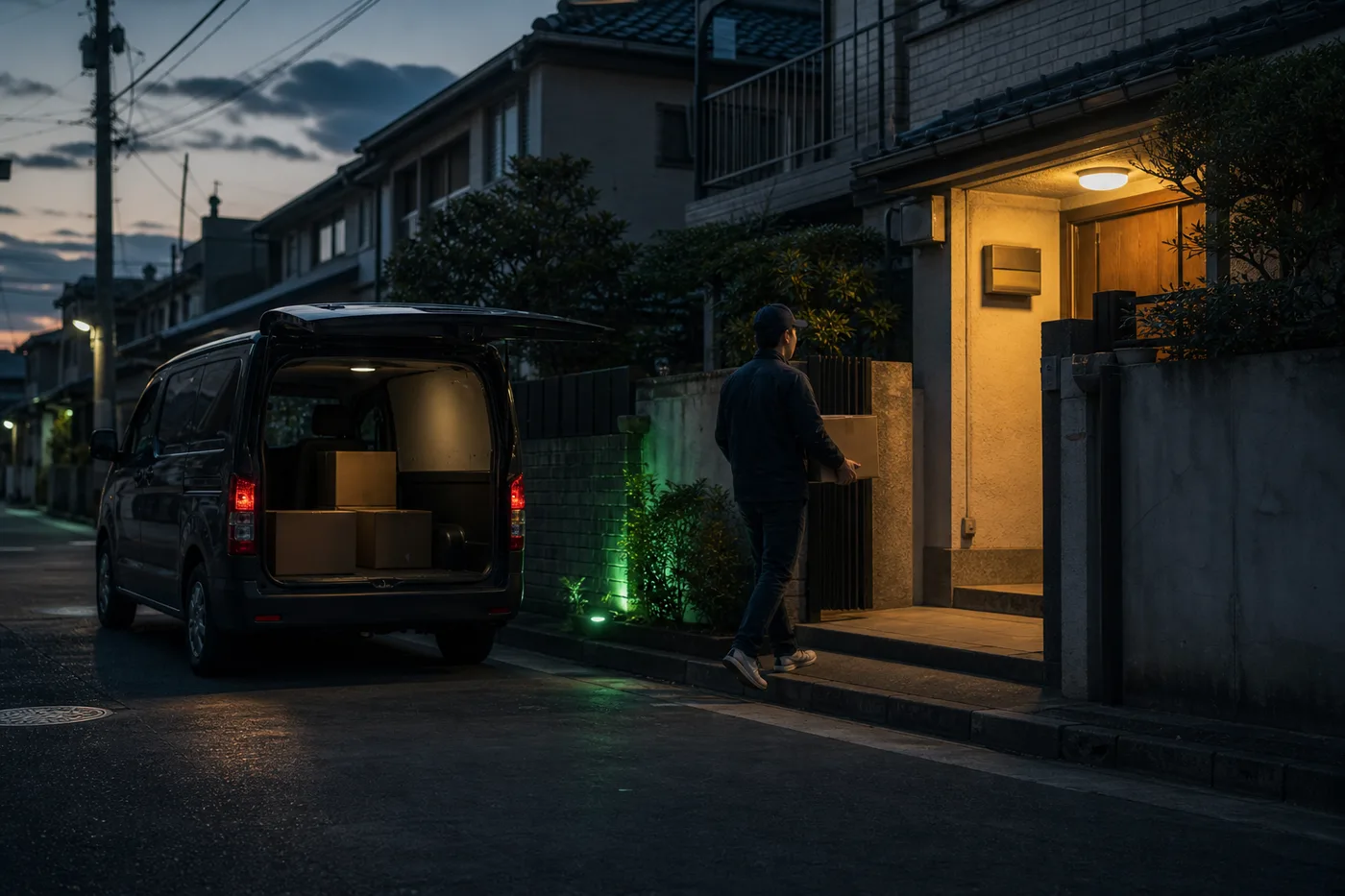
An e-commerce shipper has asked to tally last-mile delivery carbon by measurement.
- High-frequency last mile estimated with an average factor
- Stop-and-go at each door never captured
- Load factor and route swings flattened
- No data to show when asked for the basis
- Last-mile actual fuel and route measured by DTG
- High-frequency stops and starts reflected by measurement
- Tallied per delivery on measured data
- Verifiable reporting under ISO 14083
Here's how it fits your industry.
Measure the last mile — tallying the true emissions of high-frequency parcel delivery.
The supply chain changes when shippers demand the carbon data.
Most transport emissions come from vehicles the shipper never drives. That data only turns from estimate to measurement when the shipper asks for it as a term of business.
Draw the boundary at paid freight
Only transport you paid a freight charge for is the correct boundary for a shipper's Scope 3 report. LCS draws that boundary cleanly — no gaps, no double counting.
Classify by measurement, not estimation
Instead of average factors, we use data measured directly at the vehicle, classified precisely by transport mode and leg. A single ISO 14083 method that passes verification.
Require it of subcontractors
When a shipper requires measured data as a term of contract, the whole supply chain shifts from estimate to measurement. The request is where change begins.
Don't make the ask alone.
As your partner, LCS gives you the grounds to require data from subcontractors — and gives them the tools to respond. We build the bridge to measurement between the shipper who asks and the carrier who answers.
The questions this industry asks most.
How is transport carbon measured for parcel last-mile delivery?
The last mile delivers small loads at high frequency, an emission-intensive leg where stops and starts at each door repeat. LCS measures the delivery vehicle actual fuel and route with DTG at 1-second (1-Hz) resolution and calculates this high-frequency running accurately under ISO 14083.
Why is calculating parcel delivery with average factors inaccurate?
E-commerce last-mile has wide swings in load factor and route, so average factors cannot reflect the real emissions of stopping and starting at each door. The high-frequency stop-and-go leg in particular gets flattened. DTG measurement captures the actual fuel and route as they are.
How do the paid-freight boundary and allocation apply to parcel last-mile?
Only paid delivery you were charged a freight for is the correct boundary for a shipper's Scope 3 reporting. LCS draws the boundary at the paid last-mile legs and allocates measured fuel on ton-km by delivery count and weight to tally it accurately per shipper.
How do we get parcel carriers to report their data?
Delivery carriers respond when an e-commerce shipper requires last-mile carbon on a measured basis. LCS connects DTG to the OBD-II of delivery vehicles so trip records become evidence, and Cloud tallies the high-frequency deliveries into the shipper reporting.
Start with the last mile — by measurement.
We assess your industry's transport carbon regulations and your path to measurement, together.