DHL GoGreen Plus
An insetting service that allocates the environmental value of SAF, biofuel and other low-carbon fuels to customer shipments.

Electric trucks, SAF and marine biofuels reduce transport emissions. An EAC verifies that benefit and records which customer can claim it.
Changing the fuel creates a reduction. But green transport also needs a trusted record of who bought that reduction and who may report it. The EAC connects those two sides.
The labels vary — insetting, green freight, ECO Delivery — but the structure is consistent: verify the benefit of low-carbon fuel and allocate it to a customer’s transport.
An insetting service that allocates the environmental value of SAF, biofuel and other low-carbon fuels to customer shipments.
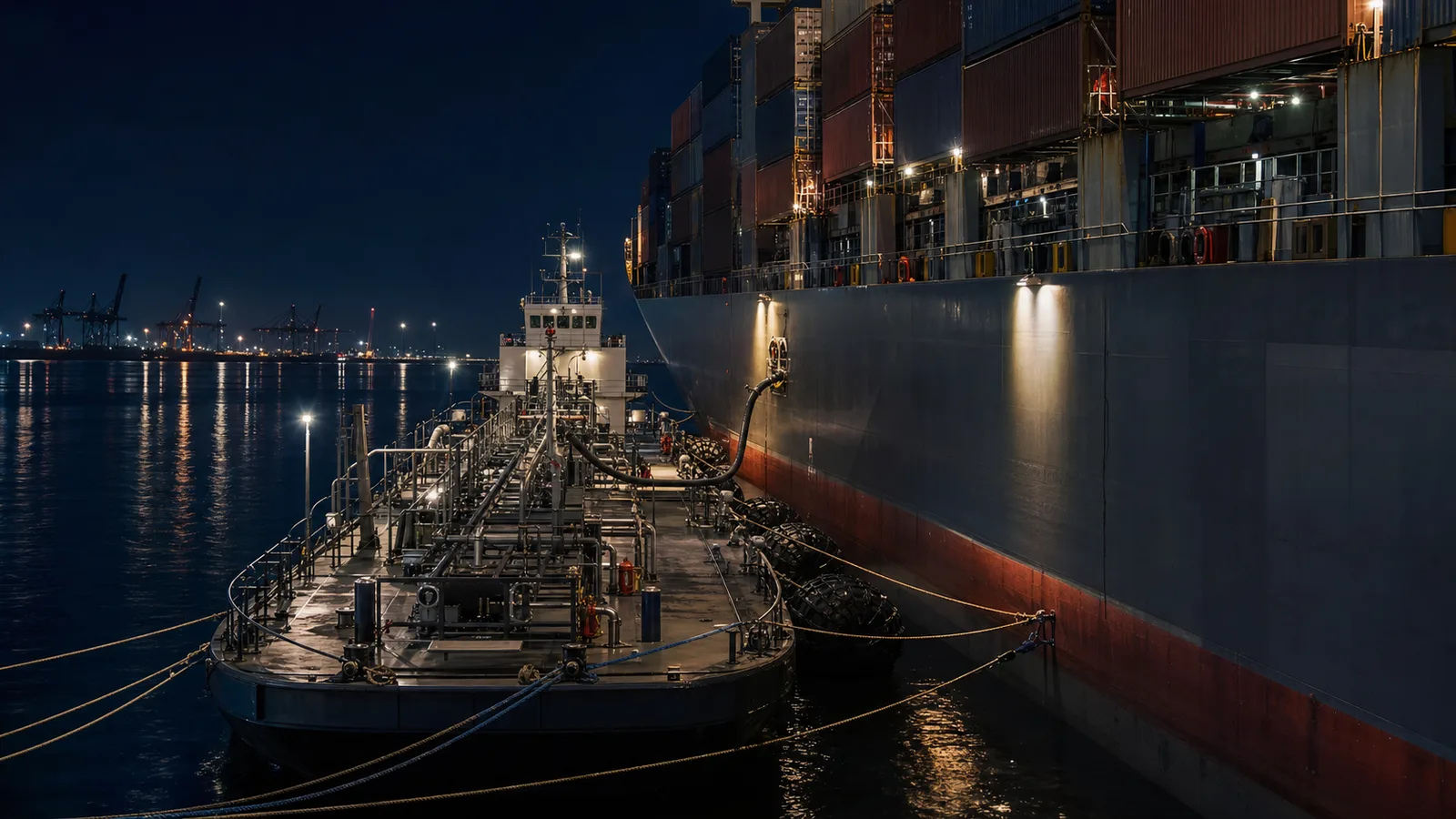
Marine-biofuel reductions are allocated to customer cargo with customer-specific reduction certificates.
The environmental value of SAF is allocated to air-freight customers through Book & Claim.
SAF use and corporate-customer participation programmes connect lower-carbon fuel with air-transport demand.
A public case connecting purchased low-emission ocean freight with GLEC-based accounting and customer reduction certificates.
These companies are market benchmarks, not partners or customers of LCS.
The mode changes, but the questions do not: where did the reduction happen, and who bought its benefit?
A shipper cannot always choose the exact aircraft or vessel carrying its cargo. Book & Claim verifies a reduction where low-carbon fuel is actually used, separates its environmental value into a certificate, and assigns that value to the buying customer.
It works like a renewable-energy certificate. Your building may not have its own solar panels, but it can buy the verified environmental value of renewable power generated elsewhere on the grid.
Built on the Smart Freight Centre Book & Claim framework: physical and certificate flows stay separate but are connected by one verification trail.
If the baseline and the new transport emissions cannot be trusted, neither can the certificate. LCS is preparing standards-based infrastructure connecting measurement, verification, issuing-body integration and attribution records.
A measurement system with SFC verification of ISO-14083 conformity records the evidence behind each transport service and reduction.
Issuing authority rests with SFC and 123Carbon. LTS is reviewing integration as the verification and administration layer.
Marketplace integration for the trading and attribution path of verified reductions is under review.
Reductions already supported or counted elsewhere are deducted, leaving only the additional benefit.
LCS has begun its EAC issuance and trading service. NDAs are in place with the 123Carbon Registry and the Carboninsets Marketplace as operations expand together.
Now that the concept is clear, see what changes from your side of the transaction. Each page follows the problems and the order in which they get solved.
We map the path from measurement to certificate attribution around your fleet, transport modes and low-carbon fuel plans.
Get plain answers on what an EAC (reduction proof) is and how green transport becomes tradable proof.