
LCS
FOR FORWARDERSSee more30-min diagnosis
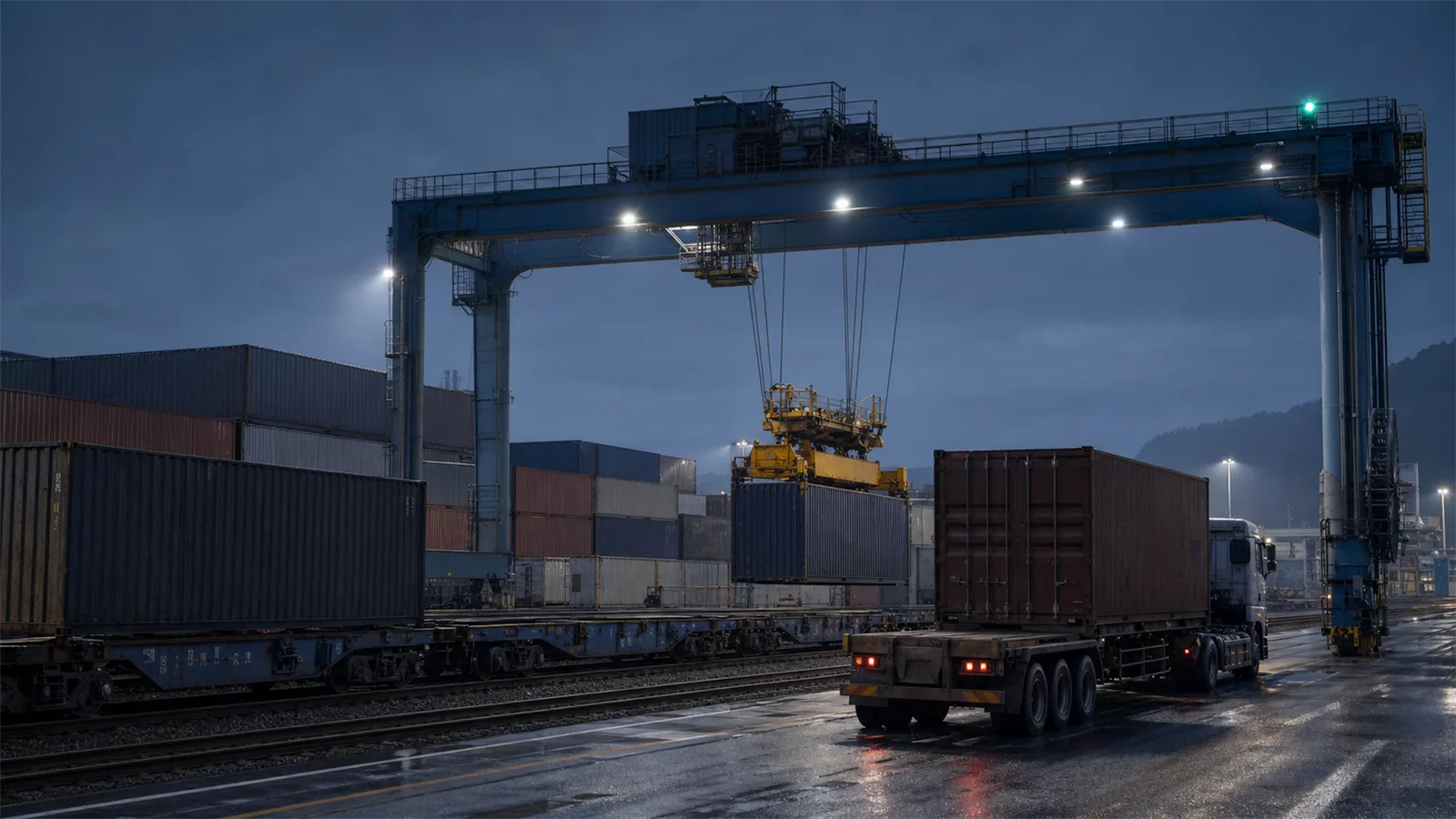
Intermodal rail terminal at blue hour
01 · The transport junction

The freight arrived.The data behind its waybill did not.

The forwarder connected road to rail and port to door. But when the shipper asks for the emissions behind one waybill, the records from the vehicles that actually ran each leg are scattered across subcontractors. The freight path is complete. The data path still has gaps.

Forwarding desk at night — waybill stack and shipment board screens
02 · The issuer answers

If you issue the waybill,you answer for its data too.

Shippers do not trace every subcontracted vehicle themselves. They ask the forwarder that issued the waybill and invoiced the freight for that shipment’s emissions and calculation basis. The reporting methods published by DSV, DB Schenker, DHL and Kuehne+Nagel all make the shipment or waybill the point where the answer is found.

03 · The data path

Measure at the subcontracted vehicle.Attach it to the waybill. Deliver it to the shipper.

First, emissions are measured on the vehicle that actually ran each leg. Next, those records are attributed to the relevant waybill. The legs are then combined into one shipment report for the shipper. The forwarder does not need to own the truck. It needs to connect the vehicle record to the right waybill.

LIVE · CHAIN → LEDGERDemo scenario · all figures (example)
Multi-tier chain · measured sources
T-041Carrier partner A
62 km/h · 27.6 L/h · OBD-II 1-Hz (example)
T-107Owner-operator
55 km/h · 25.5 L/h · OBD-II 1-Hz (example)
T-233Tier-2 carrier
78 km/h · 32.6 L/h · OBD-II 1-Hz (example)
Measured record stream
T-04109:00:000.028 kgCO₂e (example)rec_1054
Shipper submission ledger · one line of evidence
3120 recordsΣ 128.5 kgCO₂e (example)ISO 14083 · paid legs only
04 · What the shipper receives

The freight invoice goes outwith waybill-level CO₂e.

The shipper no longer needs to wait for a separate annual total. With emissions and supporting records attached to each waybill, the figure can move directly into the shipper’s Scope 3 process. The forwarder can answer in the same format without searching the subcontracted chain again for every request.

LIVE · MEASURE → VERIFYDemo · all figures (example)
01Measure62 km/h · 0.94 kg CO₂e/km (example)
LTS Carbon DTG · OBD-II 1-Hz
02Calculate+0.44 kgCO₂e (example)
ISO 14083 · ton-km allocation · paid legs
03Report3,214 records → 1 report (example)
Shipper-ready report · shipment-level
04Verifyhash·9e37
record_hash pinned · 1,800 KOLAS-accredited runs
Submission ledger · one line of evidence
records 3,214Σ 1284.6 kgCO₂e (example)ISO 14083
05 · The evidence

Every waybill figure retainsits measurement and certification trail.

Each figure sent to the shipper can be traced back to the transport record behind it. The measurement system holds SFC verification of ISO-14083 conformity, and its accuracy is supported by 1,800 KOLAS-accredited test runs. When a shipper asks about one shipment, the connected evidence is ready with it.

1,800 runsKOLAS-accredited verification
The original SFC verification statement of ISO-14083 conformitySmart Freight Centre · ISO 14083:2023 · GLEC Framework V3 · Logistics Carbon StandardMeasurement accuracy separately verified across 1,800 KOLAS-accredited runs
Publicly confirmed · waybill-level response

Answering at waybill level is already the market standard.

The labels vary: invoice, consignment, AWB and shipment. The common point is the same. A shipper can find and export CO₂e for the transport it commissioned instead of receiving only a company-wide annual total.

The response side · public examples at shipment and waybill level

DSVPer-shipment CO₂e shown on customer invoicesISO 14083·GLEC aligned
DB SchenkerConsignment- and leg-level customer reportingIncludes terminal emissions · ISO 14083 aligned
DHLWaybill (AWB) and customer-account emission reportingISO 14083·GLEC · SGS external verification
Kuehne+NagelShipment-level emission export in myKNEcoTransIT · ISO 14083 · annual verification

CountEmissionsEU entered into force on 1 June 2026. The market is moving toward shipment-level CO₂e and primary-data share entering tender scorecards in 2027–28.

Sources: published corporate calculation methodologies, customer-reporting guidance and the European Commission. These companies are market benchmarks, not partners or customers of LCS.

Data path builder

See how data flows through your subcontracted network.

Pick your relay structure and mode mix, and watch how measured data travels from vehicles to the shipper report.

Relay structure
Mode mix

← Swipe to see the full path

Partner A · RoadVehicle-measured
Partner B · SeaVehicle-measured
Waybill link
Forwarder (issues waybill)Waybill link
LCS Cloud aggregationISO 14083 · ton-km
Per-shipment report
Shipper reportPer-shipment report

2-tier relay · measured data from 2 legs converges on one waybill. The trucks belong to partners — but the one who hands the shipper the evidence is the forwarder who issued the waybill.

Book a 30-min diagnosis →Structural example. The actual path is designed together around your contracts and mode mix.

Map the network you already connect.

A 30-minute session traces the data path that fits your charter structure and mode mix.

Book a 30-min diagnosis →By transport modeSee more
LCS is a brand owned and operated by Logistics Tech Standard Co., Ltd. About the company (LTS)Instrument demo figures labeled (example) · case figures from public sources
Carbon data brokerage for forwarders — LCS